Meta Title: Trash Sorting in Germany: Complete Guide to Mülltrennung (2026)
Meta Description: Confused about Mülltrennung? Learn German bin colors, Pfand, Sperrmüll, electronics, batteries, glass recycling and special waste rules in one complete expat guide.
Focus Keyword: trash sorting in Germany
Slug: trash-sorting-germany-guide
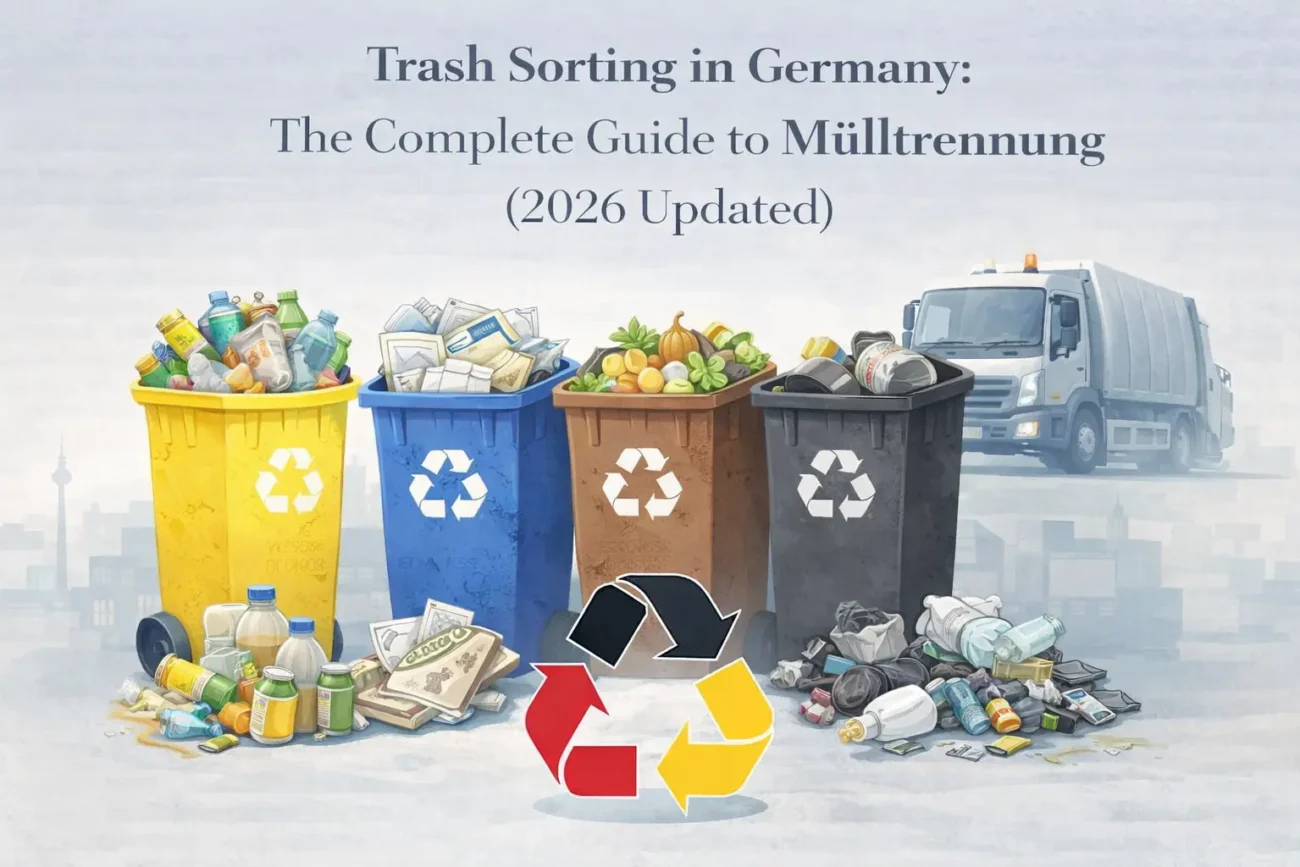
Quick Answer: Germany uses a mandatory color‑coded waste system — Blue (paper), Yellow/Orange (packaging plastics & metals), Brown (organic waste), Grey/Black (residual waste) — plus glass container stations and Pfand bottle return machines. Special disposal routes exist for electronics, batteries, medicines, bulky waste, hazardous materials, and textiles.
Why Trash Sorting in Germany Matters
Germany operates one of the world’s most advanced waste management systems. Waste separation begins at home and enables recycling, composting, and energy recovery processes that conserve resources and reduce emissions.
For residents, Mülltrennung is both a legal obligation and a social norm. Incorrect sorting can result in:
- Administrative fines
- Increased building disposal costs
- Refused bin collection
- Formal landlord warnings
- Neighbour complaints
Understanding the system helps you avoid penalties, reduce waste fees, and integrate smoothly into daily life in Germany.
German Bin Color System — Quick Overview
| Bin Color | German Name | What Goes In |
|---|---|---|
| 🔵 Blue | Blaue Tonne | Paper, cardboard, newspapers, magazines |
| 🟡 Yellow / Orange | Gelbe Tonne / Wertstofftonne | Plastics, metals, composite packaging with Grüner Punkt |
| 🟤 Brown | Biotonne / Biomüll | Organic and food waste, garden trimmings |
| ⚫ Grey / Black | Restmülltonne | True residual waste that cannot be recycled or donated |
| 🟢 / ⚪ / 🟤 | Glascontainer / Glasiglu | Glass bottles and jars without Pfand, sorted by color |
⚠️ Municipality differences: Bin colors, accepted items, and disposal routes can vary by city. Always confirm unusual items using your local Abfall‑ABC tool.
Blue Bin (Paper & Cardboard)
Accepted
- Newspapers, magazines
- Office paper
- Envelopes with windows
- Clean cardboard boxes (flattened)
- Egg cartons
- Paper bags
- Books (if not reusable)
Not accepted
- Greasy cardboard
- Tetra Pak cartons
- Plastic‑coated paper
- Thermal receipts
💡 Tip: Separate clean pizza box lids into blue bin; greasy parts → Restmüll.
Yellow Bin (Packaging Plastics & Metals)
Accepted
Plastic: bottles, yogurt pots, trays, films, bags, caps
Metal: cans, lids, foil, tubes
Composite: Tetra Pak cartons, coated packaging
Rules
- Empty contents
- Light rinse only
- Do not stack containers
Not accepted
- Glass
- Electronics
- Pfand containers
- Construction Styrofoam
Brown Bin (Organic Waste)
Accepted
- Fruit & vegetable scraps
- Leftover food
- Coffee grounds & filters
- Tea bags (no staples)
- Eggshells
- Paper tissues
- Garden trimmings
- Small amounts of soil
Not accepted
- Plastic bags (even biodegradable)
- Liquids & oils
- Cat litter
- Cigarettes
💡 Use newspaper or paper bags as liners.
Grey Bin (Residual Waste)
Typical items
- Hygiene products
- Diapers
- Vacuum dust
- Broken ceramics
- Mirrors & cookware glass
- Greasy packaging
- Thermal paper
- Ash
- Animal waste
Use this bin only when no other disposal route exists.
Glass Recycling (Glascontainer)
Glass containers are placed in street collection points and sorted by color.
Sorting
- White glass
- Brown glass
- Green glass (including mixed colors)
Rules
- Remove lids → Yellow bin
- Respect quiet hours (often 8:00–20:00)
⚠️ Drinking glasses, mirrors, and heat‑resistant glass usually belong in Restmüll or Recyclinghof.
Pfand Deposit System
Many beverage containers include refundable deposits.
Typical deposits
- €0.25 single‑use
- €0.08–0.15 reusable
Process
- Insert containers into supermarket Pfandautomat
- Receive voucher
- Redeem at checkout
Usually no Pfand
- Wine bottles
- Tetra Pak
- Most milk cartons
Electronics & Electrical Waste (Elektroschrott)
Items with the crossed‑out wheelie bin symbol require special recycling.
Disposal options
- Electronics retailers
- Hardware stores
- Recyclinghof
- Small electronics drop boxes
Examples: phones, laptops, cables, appliances, chargers, power tools.
Battery Disposal
Never place batteries in household bins.
Household batteries
Return via supermarket, drugstore, or electronics collection boxes.
Car batteries
Carry deposit and must be returned to retailers or recycling centres.
Light Bulb Disposal
| Type | Disposal |
|---|---|
| Incandescent | Usually Restmüll |
| Halogen | Restmüll |
| LED | Electronics recycling |
| Compact fluorescent | Recyclinghof / hardware store |
| Neon | Recyclinghof |
⚠️ Rules vary locally; verify with Abfall‑ABC.
Textiles & Clothing
Best options
- Sell or donate usable items
- Altkleider containers for textiles
- Recyclinghof for unusable fabrics
Do not place textiles in household bins.
Sperrmüll (Bulky Waste)
Applies to furniture, mattresses, carpets, large items.
Disposal methods
- Sell or give away online
- Book municipal collection – Search Sperrmüll + Location
- Deliver to Recyclinghof
- Retailer take‑back when buying replacement appliances
Garden Waste
Small amounts
→ Biotonne
Large volumes
→ Recyclinghof
Christmas trees are typically collected in January on designated days.
Paint, Oil & Tires
Disposal
- Paint & varnish → hardware store / Recyclinghof
- Motor oil → retailer take‑back
- Tires → garage / recycling centre
Never dispose via household bins or drains.
Hazardous Waste (Sondermüll)
Examples:
- Pesticides
- Solvents
- Mercury thermometers
- Chemicals
Dispose via Recyclinghof Schadstoff collection.
Medicines are often accepted at pharmacies; otherwise Restmüll if permitted locally.
Top 10 Mülltrennung Mistakes Expats Make
- Putting Tetra Pak into blue bin
- Nesting packaging inside containers
- Using plastic bags in Biotonne
- Throwing Pfand bottles away
- Mixing glass colors
- Disposing batteries in household bins
- Recycling greasy cardboard
- Putting electronics into Restmüll
- Ignoring Sperrmüll booking requirements
- Confusing insulation foam with packaging Styrofoam
Abfallkalender — Waste Collection Schedule
Municipal calendars specify pickup dates and special collections.
Tips
- Place bins out evening before
- Expect holiday schedule shifts
- Use municipal apps for reminders
Search: “[City] Abfallkalender”.
FAQ (Selected)
Pizza box? Greasy → Restmüll; clean parts → Blue.
Tetra Pak? Yellow bin.
Thermal receipt? Restmüll.
Dog poop? Restmüll.
Broken wine glass? Restmüll.
Old sofa? Sell, Sperrmüll, or Recyclinghof.
Quick Cheat Sheet
Blue → paper
Yellow → packaging
Brown → organic
Grey → residual
Glass → bottle banks
Pfand → supermarket return
Sources & Verification
For municipality‑specific rules, consult:
- Local Abfallwirtschaft website
- Abfall‑ABC search tools
- Recyclinghof information pages
Summary
Mastering Mülltrennung ensures compliance, reduces environmental impact, and simplifies everyday life in Germany. When uncertain, consult local resources or use digital tools for item‑specific guidance. Proper waste separation remains one of the most effective sustainability actions residents can perform daily.
Last updated: February 2026
