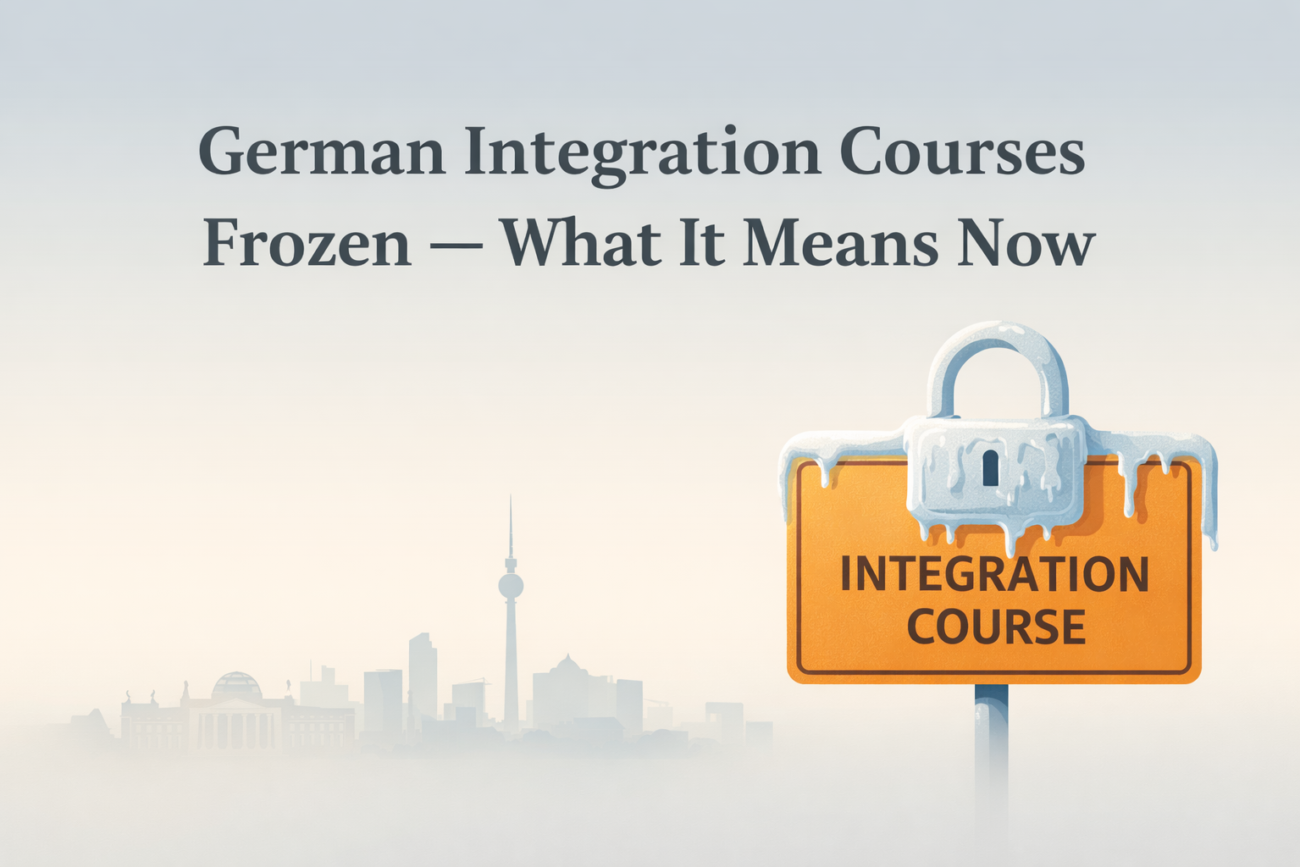
What’s Happening:
The Federal Office for Migration and Refugees (BAMF) has paused all new admissions to German state-funded integration courses until further notice. This freeze started in December 2025 and remains in effect in early 2026.
Who Is Affected:
- Voluntary participants — people without a legal obligation to attend — cannot currently get approval to join integration courses.
- Groups most impacted include asylum seekers, tolerated residents (Geduldete), Ukrainians with temporary protection and EU citizens who previously could join when space was available.
- Already approved participants and ongoing classes continue unaffected.
Why It’s Happening:
BAMF cites budget and financing challenges — integration courses are costly and span multiple years, making budget planning uncertain. Officials say aligning admissions with available funds is necessary to ensure existing obligations can be met.
What Integration Courses Are:
These courses combine German language learning with orientation modules on German culture, law and everyday life to help newcomers integrate, navigate daily situations and improve job opportunities.
Practical Consequences:
✔ Language access limited: People eager to learn German through state-funded courses now face delays or must enrol privately.
✔ Cost pressure: Private language courses can be €1,500–€2,000 per level, making them impractical for many.
✔ Integration slowed: Without classes, newcomers may struggle to reach language levels required for work, study or naturalisation.
Political Debate:
The decision has drawn criticism from politicians, educators and civil society who argue that limiting access—especially amid skilled labour shortages—hurts integration, labour market entry and long-term social cohesion.

Hi, this is a comment.
To get started with moderating, editing, and deleting comments, please visit the Comments screen in the dashboard.
Commenter avatars come from Gravatar.